
What Does a Commercial Property Management Company Actually Do?

If you own a commercial building, you've probably asked this question at some point: what exactly am I paying a property management company for? The short answer is everything between owning the asset and profiting from it. The long answer is a lot more specific, and it's worth understanding before you hire anyone or decide to keep managing the property yourself.
A commercial property management company acts as the operational layer between the owner and the property. They collect rent, coordinate maintenance, manage tenant relationships, keep the property compliant, and report back on how the investment is performing. Done well, this work protects the asset's value and keeps income flowing without the owner having to field every maintenance call or lease question personally.
Here's a breakdown of what that actually looks like in practice.
Rent Collection and Financial Reporting

The most basic function of a property manager is making sure rent comes in on time, in full, and in line with the lease terms — including annual escalations, percentage rent, or expense pass-throughs where applicable. Beyond collection, owners should expect regular financial reporting: income statements, operating expense breakdowns, net operating income (NOI), and capital expenditure summaries.
This reporting matters more than most owners realize. Without a clear financial picture, it's hard to know whether a property is actually performing or just coasting. As covered in this breakdown of how property management affects long-term ROI, financial visibility is often the difference between a property that appreciates and one that quietly underperforms.
Tenant Relations and Lease Compliance
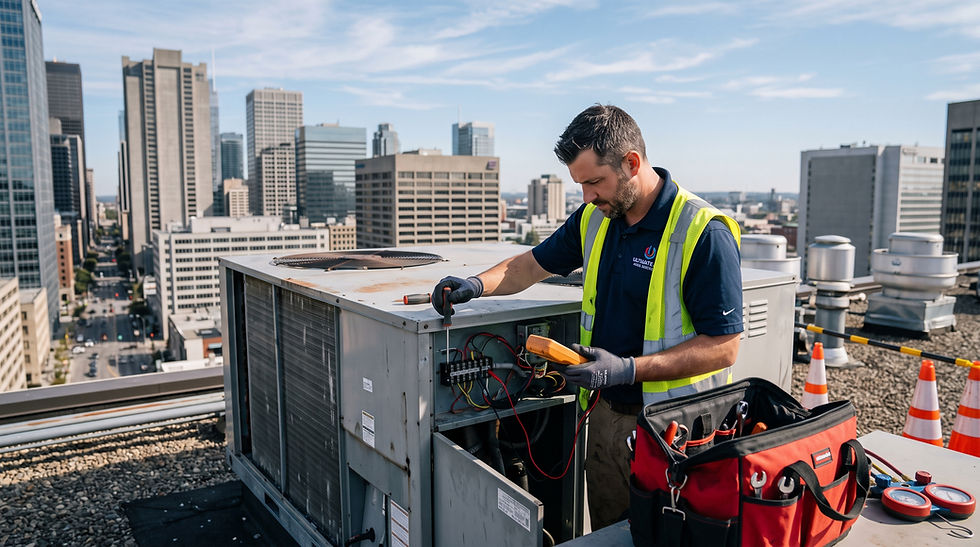
Commercial tenants have needs tied directly to their business operations — HVAC hours, loading dock access, signage rights, parking allocation. A property manager becomes the single point of contact for these requests, which keeps small issues from turning into lease disputes.
Lease compliance monitoring is part of this too. That means confirming tenants are operating within their permitted use, carrying the required insurance, and meeting their lease obligations. It's not glamorous work, but it's what prevents a minor oversight from becoming a legal or financial problem later.
Maintenance and Vendor Coordination
Every commercial building needs ongoing upkeep: HVAC servicing, roof inspections, plumbing, electrical systems, parking lot maintenance, landscaping, and janitorial service for common areas. A management company maintains a vetted network of vendors, schedules preventive work, and handles emergency repairs when they come up.
The gap between reactive and proactive maintenance is where a lot of long-term value gets lost or saved. Deferred maintenance compounds into bigger, more expensive problems, and tenants who deal with slow repair response tend not to renew. If you're weighing whether outside management is worth it for your building, why professional property management has become more important than ever for commercial property owners covers why this has become less of a nice-to-have and more of a baseline expectation in today's market.
CAM Reconciliation and Expense Management
For properties with NNN or modified gross leases, annual CAM (Common Area Maintenance) reconciliation is one of the more technical responsibilities a manager handles. This involves reviewing actual operating expenses for the year, comparing them against what tenants paid in estimated CAM charges, calculating each tenant's proportional share of any difference, and issuing accurate year-end statements.
Mistakes here — overcharging tenants, missing negotiated caps, or leaving out legitimate expense categories — can damage tenant relationships and expose owners to liability. This is one of the clearer arguments for professional commercial property management: getting it right consistently, across every tenant, every year.
Lease Renewal and Vacancy Management
A good property manager tracks every lease expiration in a portfolio and starts renewal conversations 12–18 months out — not 90 days before the lease ends, when the owner has little negotiating leverage left. Vacancy is expensive: lost rent, broker commissions, tenant improvement costs, and the risk of a market reset on rent once the space finally re-leases.
This proactive approach extends to leasing strategy as well. When a space does need to be filled, the manager coordinates marketing, screens prospective tenants, and works alongside the leasing side of the business — whether that's office space, retail space, or industrial space — to keep the vacancy window as short as possible.
Compliance and Risk Management
Commercial properties in California carry ongoing compliance obligations: ADA standards, fire codes, environmental regulations, and local zoning requirements. A property manager stays on top of these so the owner isn't caught off guard by a fine, a lawsuit, or a forced business interruption. This is a part of the job that rarely gets attention until something goes wrong — which is exactly why it belongs in professional hands.
Market Awareness and Strategic Guidance
Beyond the operational tasks, a property manager who's active in the local market brings something harder to quantify but just as valuable: current knowledge of rental rates, occupancy trends, and competitive positioning. That insight helps owners decide when to adjust asking rents, when a renewal is a chance to reset below-market rent, and how the building stacks up against comparable properties nearby.
For owners weighing a hold, sell, or refinance decision, this kind of market-grounded perspective on investment properties often matters as much as the day-to-day operations. For a deeper look at how this plays out specifically in the LA market, this complete guide to commercial property management in Los Angeles walks through cost structures, timing, and how to evaluate whether your current management is actually performing.
When Does Hiring a Property Manager Make Sense?
Not every owner needs outside management, but most underestimate the time commitment until they're deep in it. Professional management tends to make the most sense when:
You own multiple properties, each with separate lease structures and maintenance schedules
Your leases involve complex CAM reconciliation across several tenants
Your property is far from where you live or work
You're preparing the asset for a future sale or refinance and want clean, documented financials
According to the Institute of Real Estate Management (IREM), professionally managed commercial properties tend to see stronger occupancy stability and more consistent NOI performance than owner-managed comparables, largely due to structured maintenance and lease administration practices. The Building Owners and Managers Association (BOMA) similarly emphasizes that operational discipline — not just leasing activity — is what drives long-term asset value in commercial real estate.
What Commercial Property Management Typically Costs
Fee structures vary, but the most common models are:
Percentage of collected rent — typically 4–10%, depending on property size and complexity
Flat monthly fee — common for larger portfolios with predictable management needs
Leasing and renewal commissions — charged separately when a manager fills a vacancy or negotiates a renewal
How DNG Commercial Approaches Property Management
Deborah and Gulshen at DNG Commercial bring more than 20 years of combined experience managing commercial properties across Torrance, El Segundo, Redondo Beach, Manhattan Beach, Long Beach, and the broader South Bay. Because the team also actively represents buyers, sellers, and tenants in the same markets they manage properties in, the guidance owners get is grounded in current transaction data, not guesswork.
FAQs
What does a commercial property manager actually do day to day?
Day-to-day work includes responding to tenant requests and maintenance issues, processing rent payments, coordinating vendors, tracking lease compliance, and monitoring key lease dates. Monthly work adds financial reporting and budget review on top of that.
How much does commercial property management cost?
Most commercial property managers charge 4–10% of collected rent, though some use a flat monthly fee. Leasing and renewal commissions are typically billed separately.
Do I need a property manager if I only own one building?
Not necessarily, but even single-building owners benefit once the property has multiple tenants, a complex lease structure, or is located far from where the owner lives or works.
What's the difference between property management and asset management?
Property management covers daily operations — maintenance, tenant relations, rent collection. Asset management is the higher-level strategy: when to sell, refinance, or reposition the property. Some firms, including DNG Commercial, handle both.
How do I know if my current property manager is doing a good job?
Watch vacancy duration, tenant retention, maintenance response time, and the quality of monthly financial reporting. Slow, reactive, or inconsistent management is usually a sign it's time for a change.
Ready to Hand Off the Operational Work?
If you're spending more time managing your commercial property than growing your business, it might be time for a change. Explore DNG Commercial's services and talk to the team about a tailored management plan for your building — call 310.999.1203 | 562.225.9260, or reach out at deborah@rpmres.com | gulshen@rpmres.com.


Comments